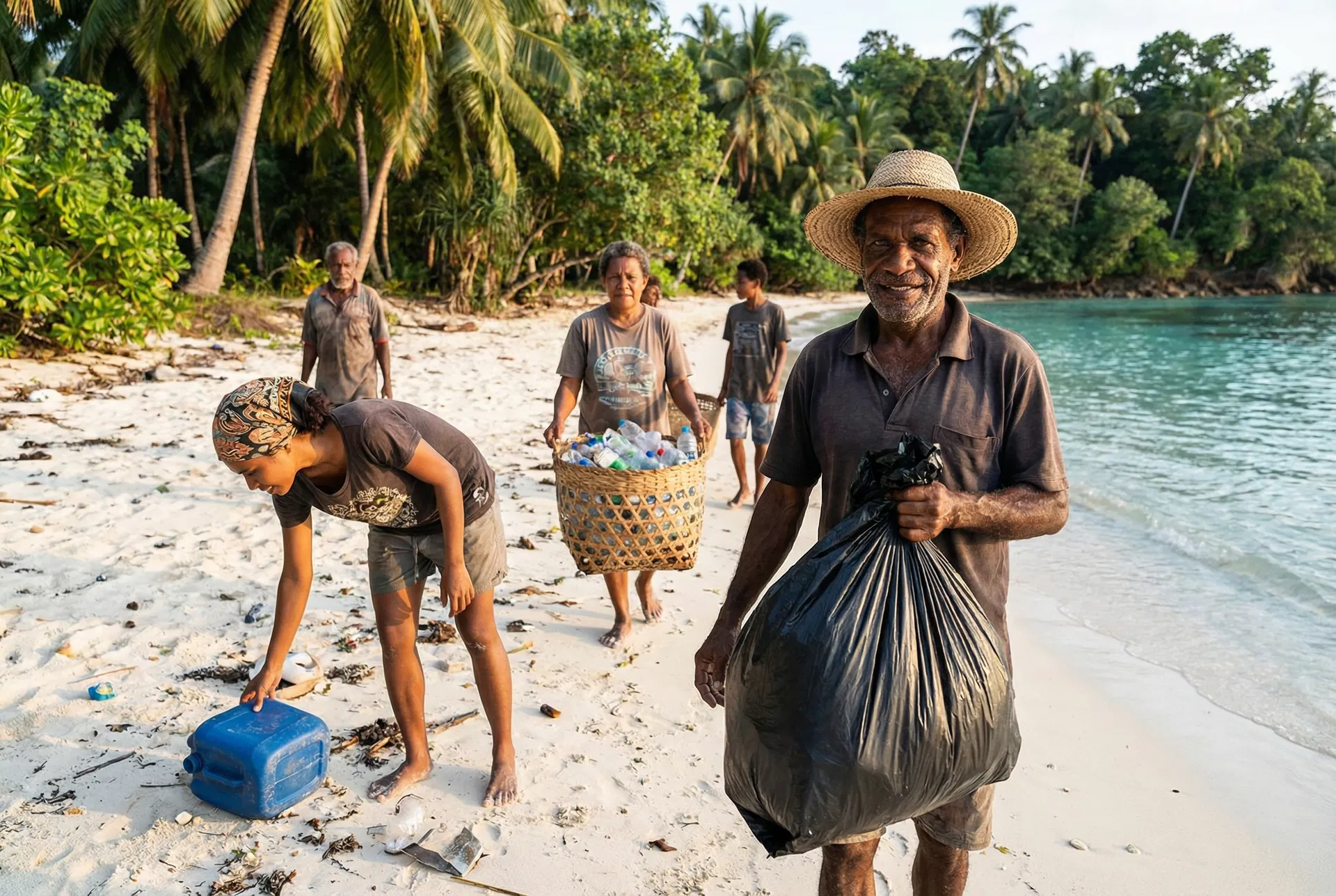
PEP currently produces bricks and paving stones from recycled plastic, sequestering large amounts of waste from Raja Ampat's communities and ecosystems in the process. This circular approach turns a pollution problem into an economic opportunity.
Plastic for these products is bought from Sorong's Bank Sampah (waste bank), creating an incentive for plastic waste collection, cleaning and sorting in the region. The result is a self-sustaining cycle that benefits both the environment and the community.
From Waste to Value
Our circular economy model transforms plastic pollution into construction materials, creating jobs and revenue along the way.
Collection
Plastic waste is collected and bought from Sorong's Bank Sampah (waste bank), creating economic incentives for waste collection, cleaning, and sorting in the region.
Production
Collected plastic is transformed into bricks and paving stones, sequestering large amounts of waste from Raja Ampat's communities and ecosystems.
Distribution
Finished bricks and stones are sold to local government, companies, and households. Proceeds help cover PEP's plastic-related operations and scholarships.
Innovation
Further products are being explored, including tiles and planks to replace those made from iron wood (increasingly rare) found on jetties across Raja Ampat.
Products & Revenue
Finished bricks and stones are sold to a wide range of clients, including the local government, companies and households. Proceeds help cover the costs of PEP's plastic-related operations and scholarships.
Further products are also being explored for production. These include tiles and planks to replace those made from iron wood (increasingly rare in the region) found on jetties across Raja Ampat.
Liveaboard Partnership
Higher-value plastic is transported to Sorong with the help of liveaboard operators who partner with PEP. These diving vessels collect recyclable materials during their voyages and deliver them to recycling facilities on the mainland.
This partnership leverages existing tourism infrastructure to solve a conservation challenge — a model that demonstrates how tourism and environmental protection can work hand in hand.
Programme Infographic
Plastic and Circular Economy
Penelitian Ecowisata Papua (PEP) · Plastic and Circular Economy
Plastic and Circular Economy
Plastic has no exit route in a remote island MPA. We are working to change that.

The approach
We work with communities on reduction, prevention, capture, and reuse. Nothing leaves the system as waste if we can avoid it. Everything that can be reused is. Led by Alex Bryant and Emperor Divers.
Community ownership
Waste management only works when communities own it. PEP works alongside communities to build systems they can maintain, not systems that depend on external support.