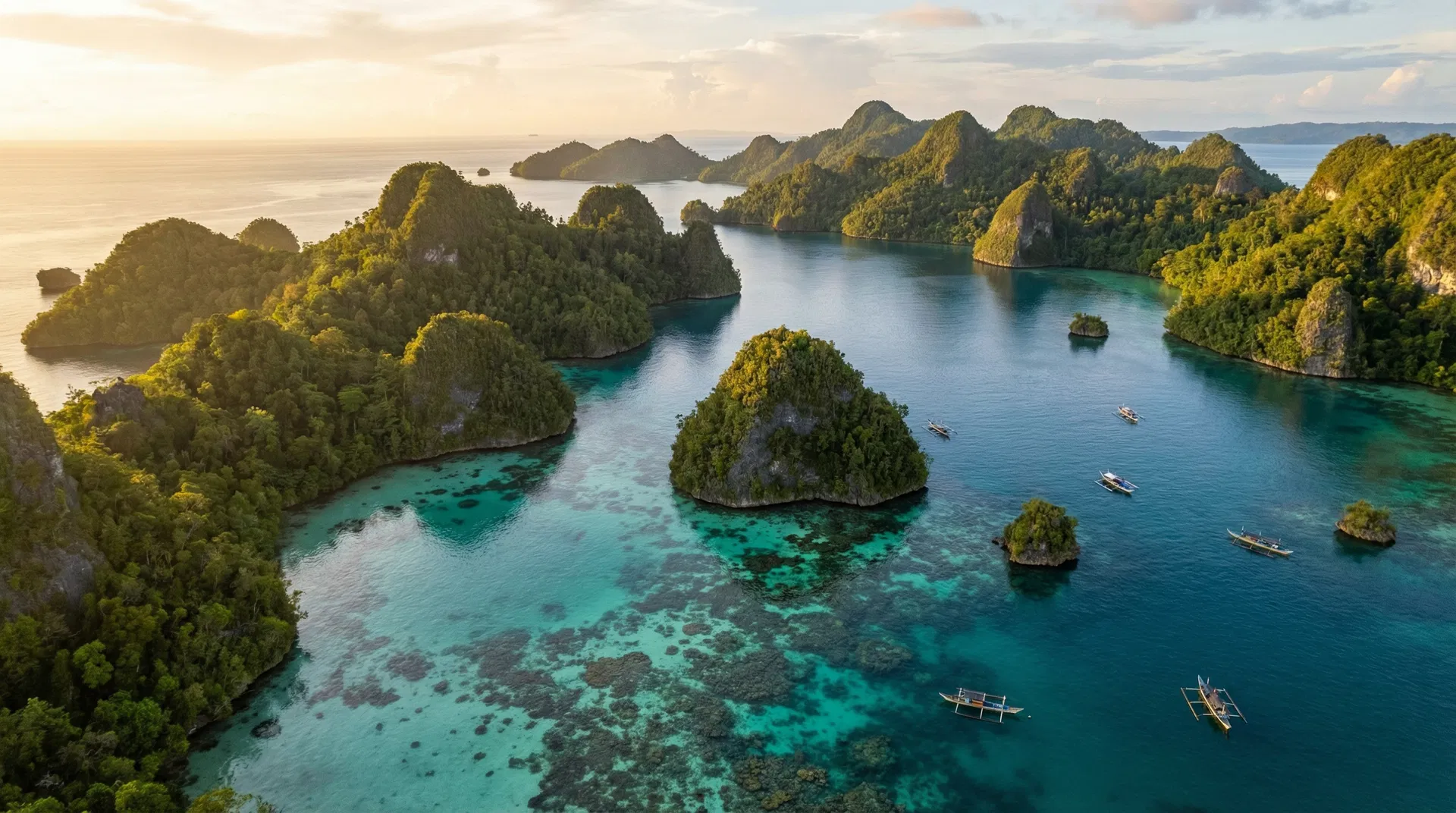
Penelitian Ecowisata Papua (PEP) · Raja Ampat, Indonesia
Rapid growth. Multiple threats.
We are studying, testing, and building solutions alongside government and community.
PEP is a conservation foundation working in Raja Ampat. We are studying, testing, and building practical solutions to the environmental challenges that come with rapid tourism growth inside a marine protected area — alongside government, community, and research partners.
Wastewater and Nitrogen Control
Untreated sewage and agricultural runoff deliver nitrogen directly to the reef through Raja Ampat's porous karst limestone. We are testing the ReefSaver, a three-stage treatment system for remote island homestays, in a funded pilot at Saporkren.
Plastic and Circular Economy
Plastic has no exit route in a remote island MPA. We are working with communities on reduction, prevention, capture, and reuse — testing what works in remote island conditions.
Reef Restoration and Biodiversity
Treating the water is step one. Giving the reef a chance to recover is step two. We are running active coral restoration at sites in the Dampier Strait and supporting wildlife including bird rehabilitation.
Vessel Monitoring and Government Tools
We are developing the LAMPT AIS tracking system with the Raja Ampat Tourism Department. It monitors liveaboard vessel positions and wastewater discharge compliance in real time. We work alongside government to build tools they can actually use.
Who We Are
Tourism in Raja Ampat has grown by approximately 4,500 percent since 2007, and, like many rapidly developing MPA destinations, waste management has struggled to keep pace with that growth.
The Papua Ecotourism Research Foundation, or PEP (the acronym for its Indonesian name), is dedicated to helping close the ensuing gap between the solid waste and sewage generated by the region's booming tourism economy and actual waste management capacity.
PEP is independent, grassroots, and highly engaged with local stakeholders, government and communities. It was founded by people who have lived and worked in Raja Ampat for years, witnessing the negative effects of rapid tourism growth. Although we do not have all the answers, we are constantly testing new solutions, learning in the process, and adapting. That is the point.
Co-Founder
Jack Burns
Jack moved to Raja Ampat in 2018 and built Raja Ampat Eco Lodge in the Dampier Strait. He invented the ReefSaver wastewater treatment system for remote island homestays. He leads wastewater and reef science, and works directly with government on environmental compliance and infrastructure. He has watched the reef he lives on change and built PEP because he believes the damage is not inevitable.
Co-Founder
Alex Bryant
Alex is CEO of Emperor Divers, one of the longest-running dive operators in Raja Ampat. He leads plastic and solid waste programs. He has seen firsthand what happens when waste management is ignored and is committed to practical solutions for remote island conditions.
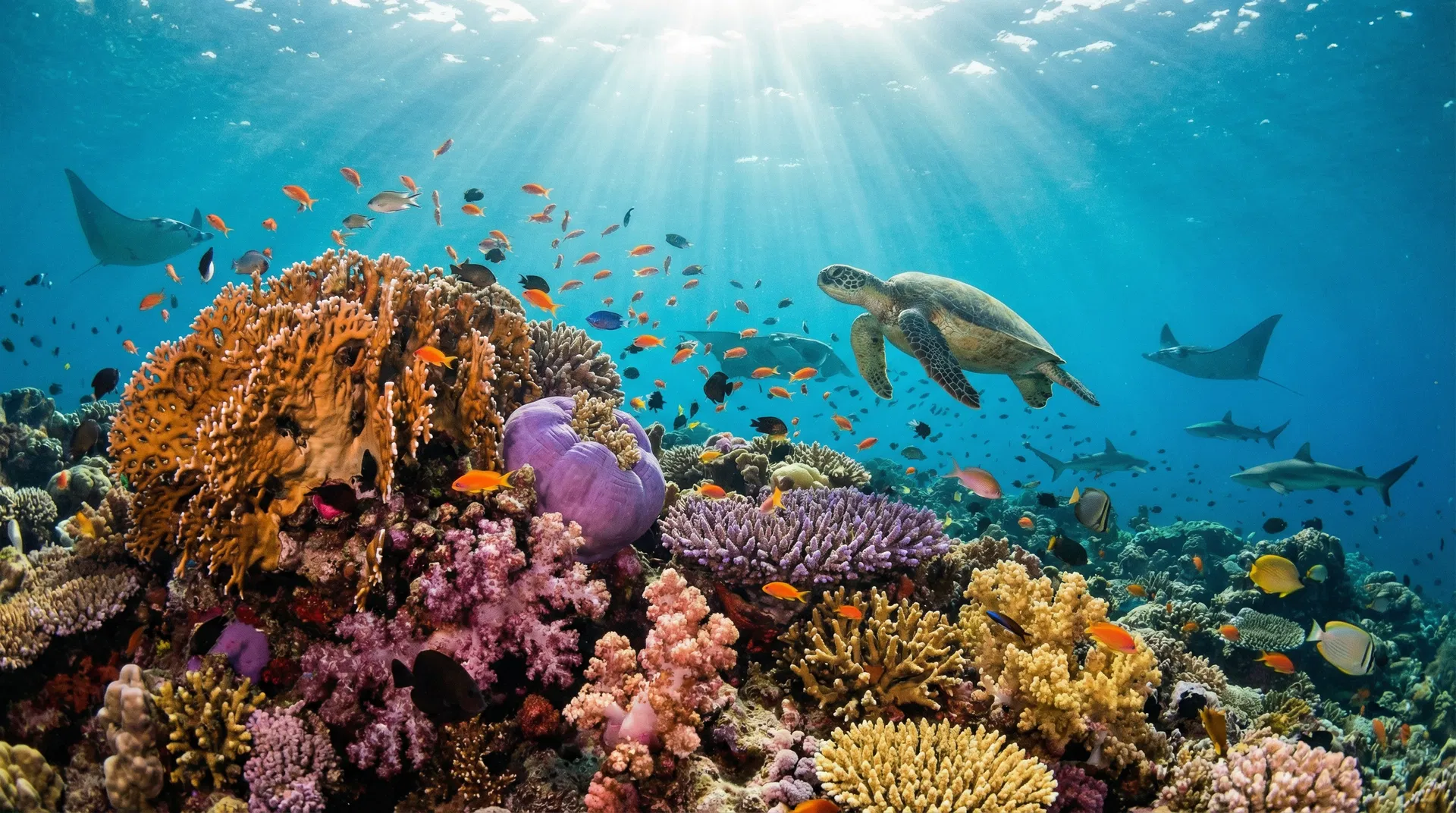
Our Story
Built by People Who Have Been Here Long Enough to Know What Is Breaking
Working independently across land and sea in the region, both Alex and Jack have witnessed the same reality: tourism has grown rapidly, but the waste management systems needed to support that growth have not kept pace. That is why PEP was established to work alongside local government and communities to address this gap with practical solutions and programs, including wastewater treatment systems, vessel monitoring, community training, assisted natural coral reef regeneration, and solid waste management.
Our Vision
A Raja Ampat where a thriving ecotourism-based economy actively contributes to the well-being of communities and the health of ecosystems on land and at sea.
Our Mission
PEP's primary mission is to improve the coordination of the Dampier Strait's ecotourism actors, activities, and infrastructure, resulting in benefits for the Papuan economy, environment, and people.
What We Are Doing
Six programmes. One philosophy: test what works, document it, share it.
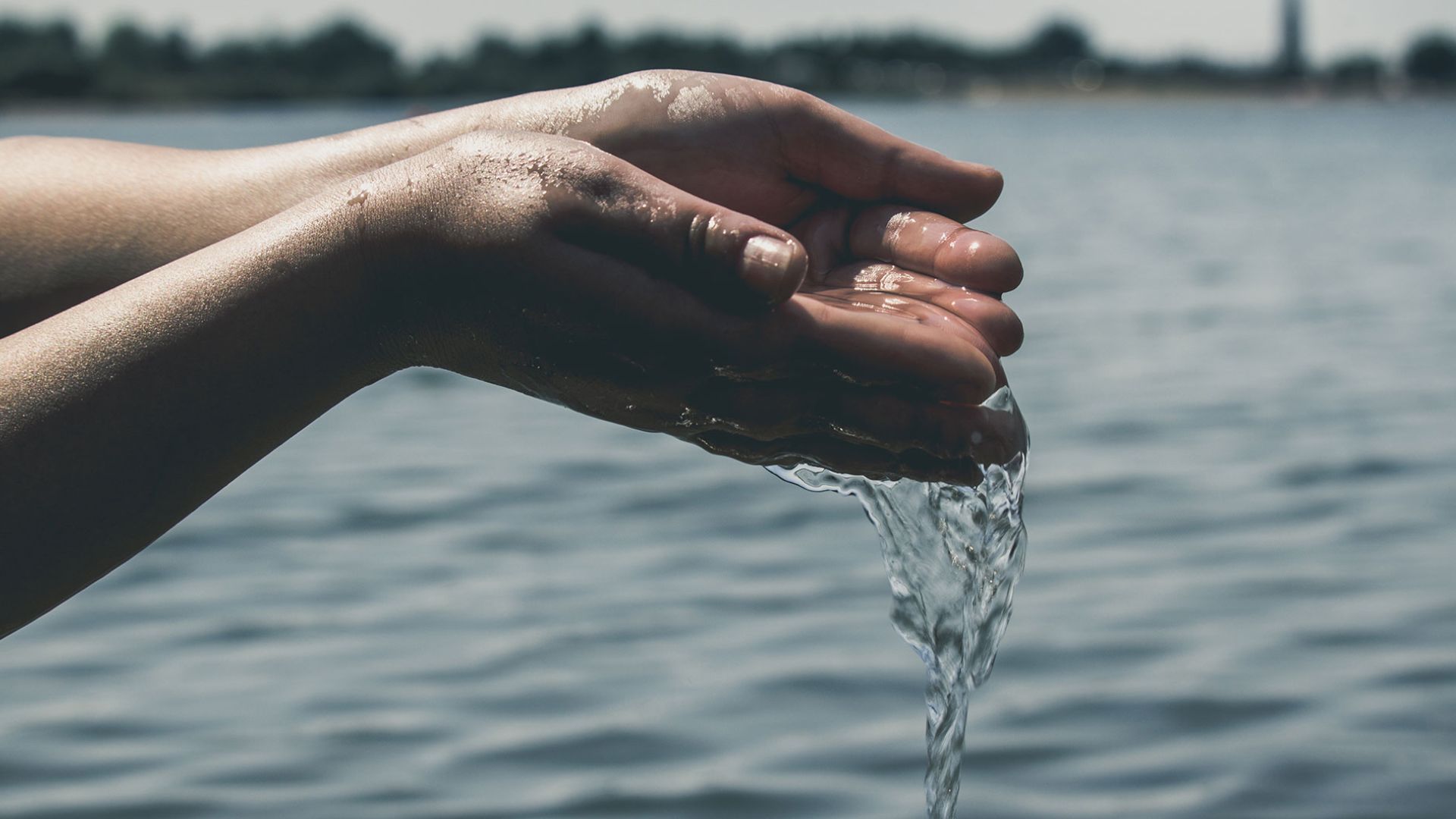
The ReefSaver
The ReefSaver is a three-stage wastewater treatment system invented by Jack Burns. Stage one: a Penguin bioseptic tank (primary treatment). Stage two: a custom two-chamber fiberglass treatment tank with pumice stone media and a PVC pipe manifold (secondary treatment). Stage three: a vetiver grass wetland bed that removes nitrogen and pathogens (tertiary treatment). Gravity-powered. No electricity required. Modular and scalable for homestays, dive resorts, and coastal households.
Learn More
Liveaboard Vessel Monitoring
The LAMPT AIS Vessel Monitoring System tracks liveaboard vessels across Raja Ampat in real time. Built by PEP in partnership with the Raja Ampat Tourism Department and BLUD UPTD. LAMPT cross-references vessel AIS positions against regulated wastewater discharge zones. The legal basis for compliance is PERBUP Raja Ampat No. 30 Tahun 2021. Compliant operators receive a certificate to display to eco-conscious travellers. A public compliance dashboard is in development.
Learn More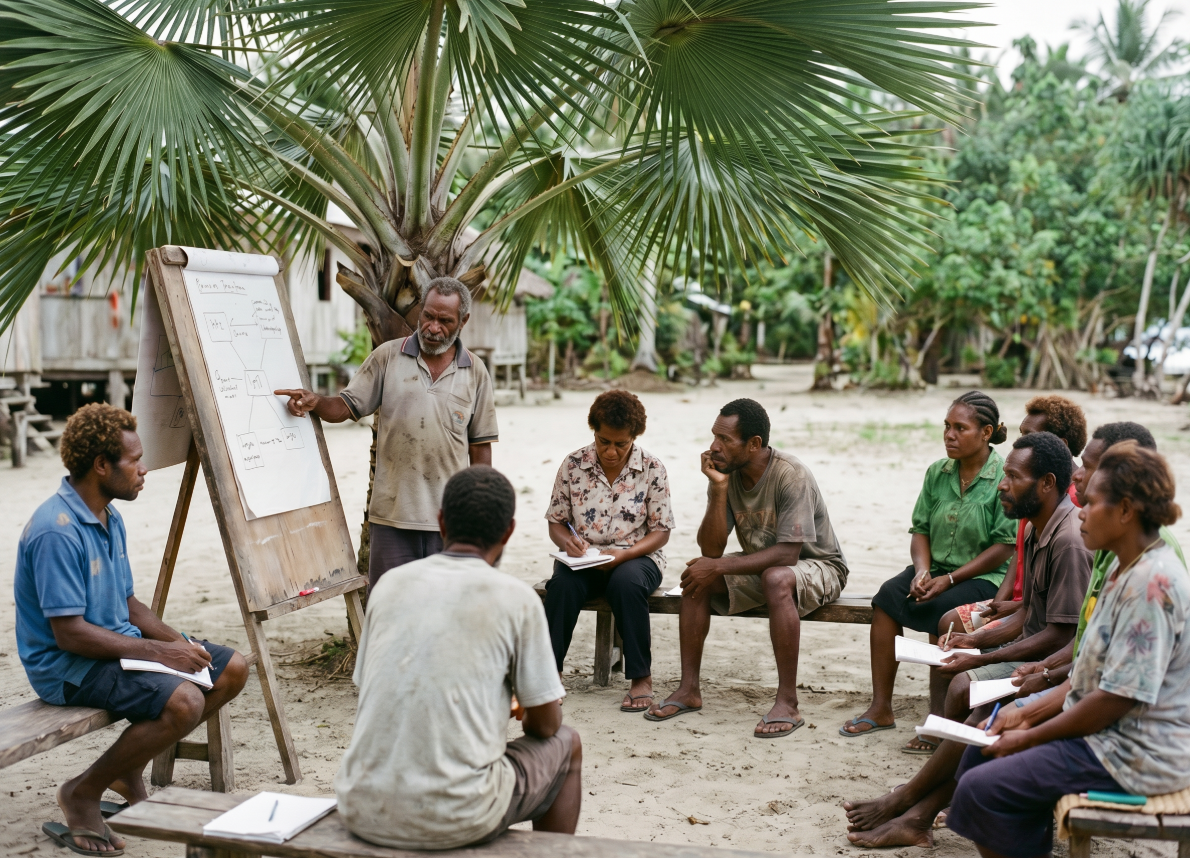
Community Education & Training
PEP's education work targets homestay owners, village communities, and local government across the Dampier Strait. The core challenge is cultural: people do not talk about sewage. PEP uses practical, humour-based, and locally appropriate methods to break that taboo. Training covers the toilet-to-reef pathway, crown of thorns starfish response, algal bloom monitoring, and community-led water quality observation. BLUD data showing faecal coliform levels above Indonesia's legal limit at Arborek and West Arborek is used directly in community sessions.
Coral Restoration
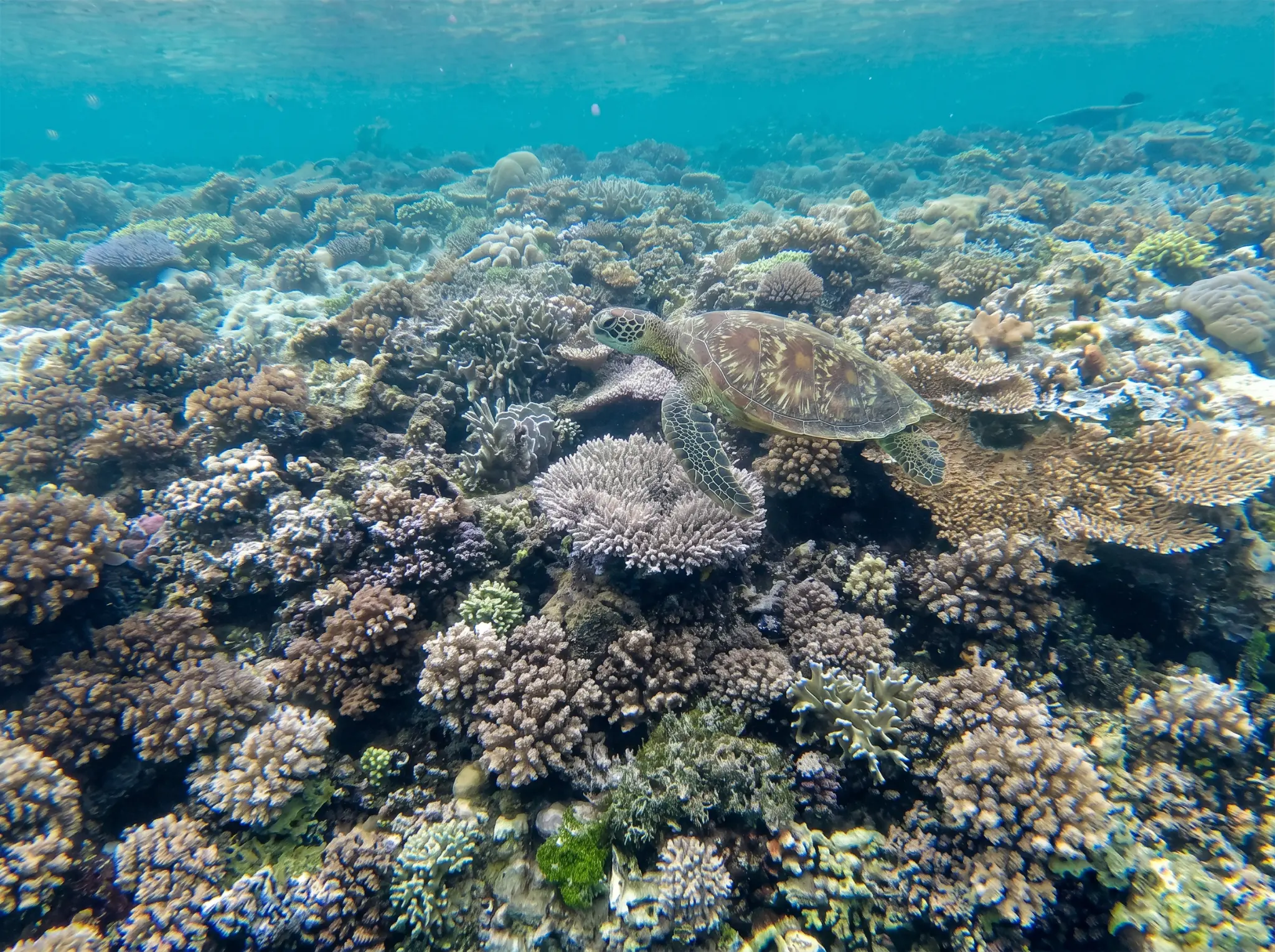
Active coral restoration at Saporkren and other sites in the Dampier Strait. PEP installs spider reef structures, transplants coral fragments, and manages algae, cyanobacteria, and sponge overgrowth. Restoration is paired with upstream ReefSaver installations at the same sites — treating wastewater before restoring corals downstream. You cannot restore your way out of a water quality problem. PEP's approach addresses both simultaneously.
Learn More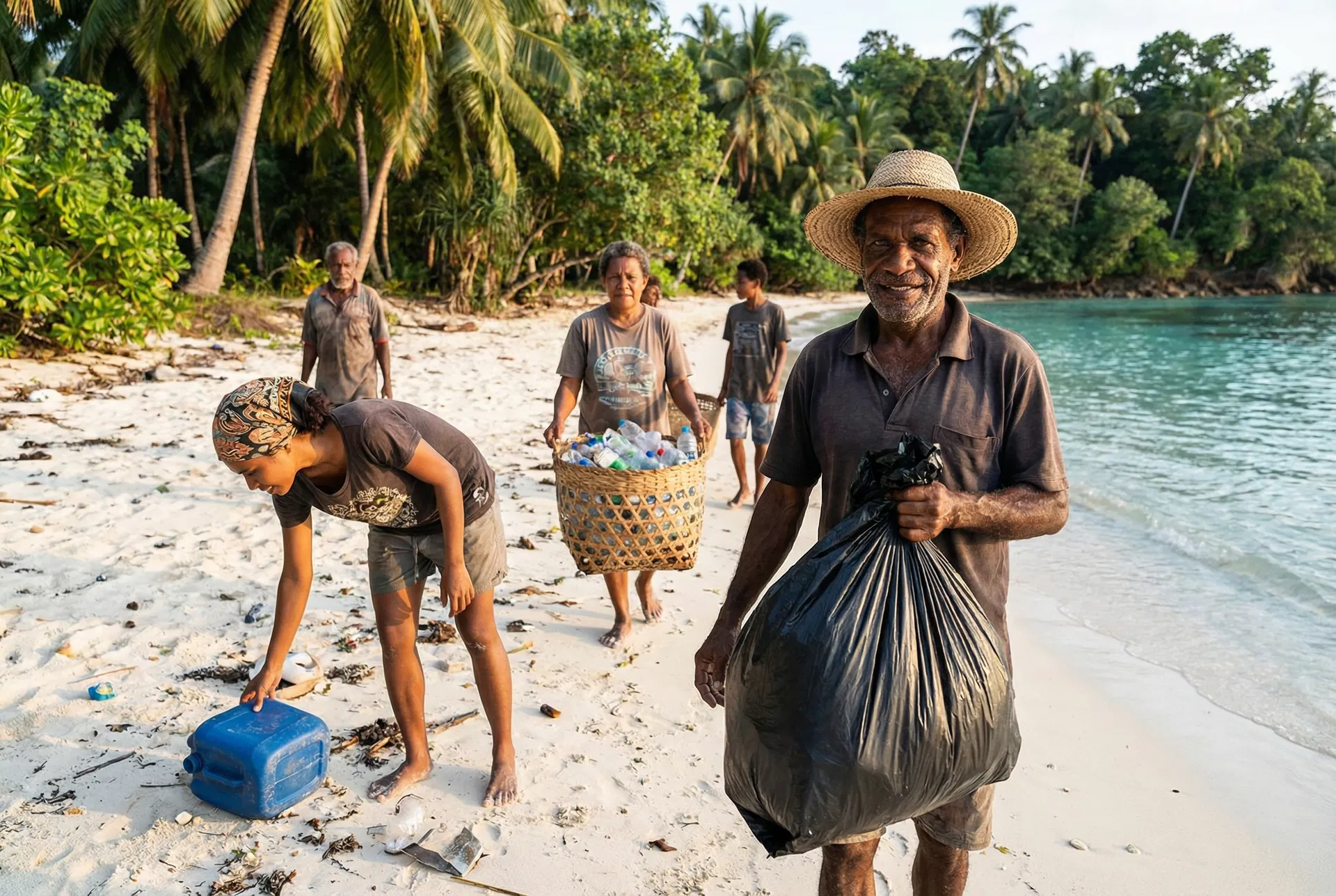
Plastic & Solid Waste
Led by Alex Bryant and Emperor Divers. Remote island communities in Raja Ampat have no formal waste collection or disposal infrastructure. Plastic accumulates on beaches, in mangroves, and in the water. PEP establishes community waste banks, practical sorting and collection systems, and circular economy approaches — creating green jobs while keeping plastic out of the reef. This programme covers education, infrastructure, and long-term community ownership of waste management.
Learn More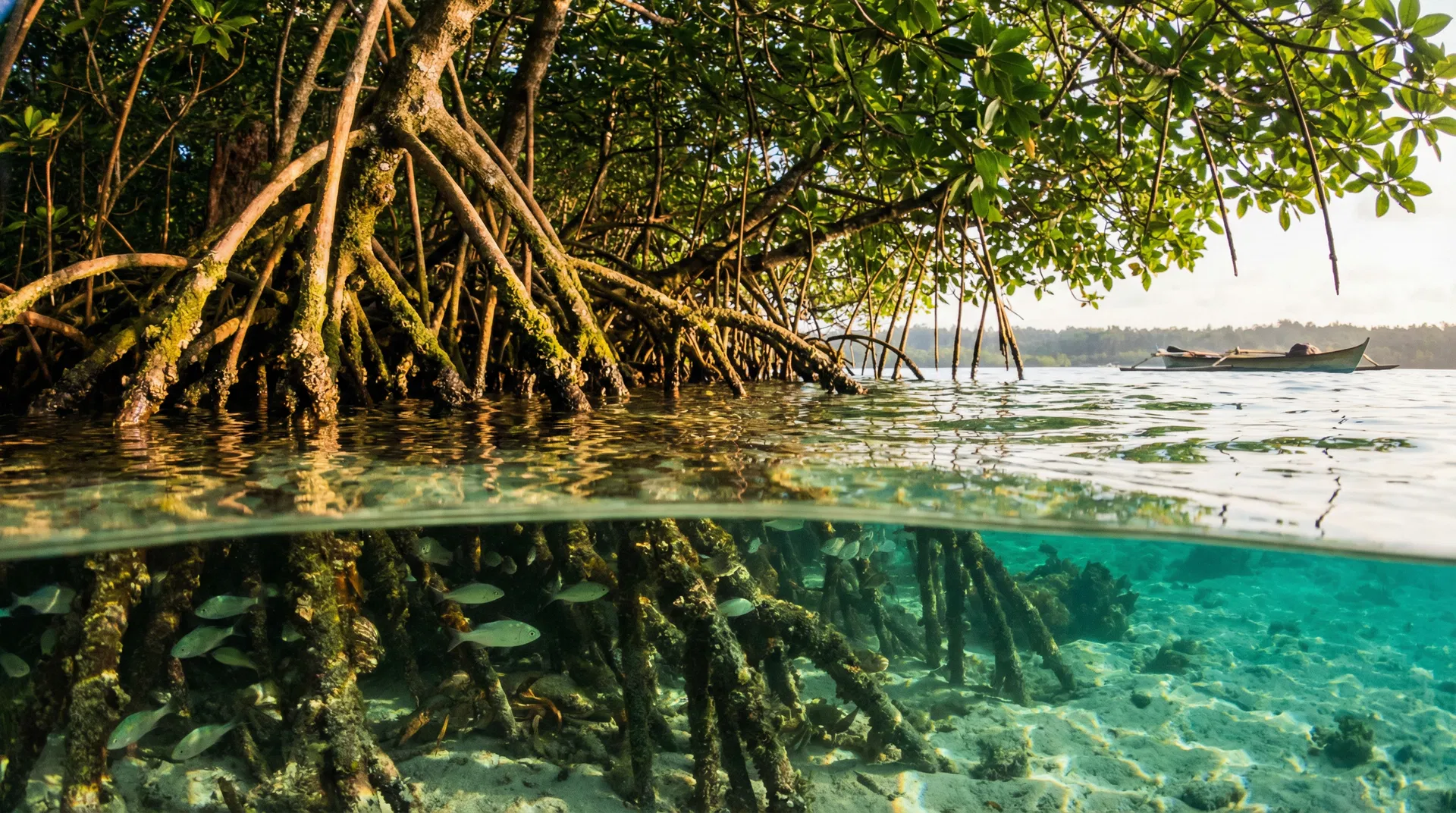
Municipal Solutions
Waisai, the capital of Raja Ampat, has grown from approximately 1,000 to 35,000 people in 50 years. The Dampier Strait receives an estimated 316 tonnes of nitrogen per year from untreated domestic sewage — equivalent to the sewage load of a city of 72,000 people discharged directly into the MPA. The ReefSaver addresses individual properties. The municipal problem requires a different scale. PEP works with the Raja Ampat local government and international development partners to identify, design, and secure funding for municipal-scale wastewater infrastructure.
Learn MoreWhy It Matters
Raja Ampat is the most biodiverse reef system on Earth. It is also one of the fastest growing tourism destinations in Indonesia. That combination creates pressures that MPA designation alone cannot solve. The boundaries are drawn. The infrastructure to protect what is inside them has not been built.
Sewage and Nutrients
Untreated wastewater from households, homestays, and liveaboard vessels flows directly into reef waters. Excess nitrogen fuels algae growth, smothers corals, and makes bleaching worse. Most properties in Raja Ampat have no treatment beyond a soak pit. BLUD water quality testing found faecal coliform counts of 1,234 per 100ml at Arborek main jetty, 875 at West Arborek, and 208 at Manta Sandy. Indonesia's legal limit is 200 per 100ml.
Karst Limestone Geology
Raja Ampat sits on porous karst limestone. Wastewater and agricultural runoff move through the rock rapidly and reach nearshore reef waters within hours. There is no natural filtration buffer. What goes in the ground goes in the sea. Raja Ampat's porous karst limestone delivers agricultural runoff and village wastewater directly to the reef with zero filtration.
Reef Degradation
Nutrient pollution lowers the temperature at which corals bleach and doubles bleaching severity. Crown of thorns starfish outbreaks — triggered by nutrient runoff — compound the damage. Reefs that could recover from climate stress are being pushed past the point of recovery by local pollution.
Plastic and Solid Waste
Remote island communities have no formal waste collection or disposal infrastructure. Plastic accumulates on beaches, in mangroves, and in the water. Without practical collection and sorting systems, waste management falls entirely on communities with no support.
04 — Science Explained
Understanding the Problem
These infographics explain the science behind what PEP is working on — why nitrogen matters, how MPAs can trap pollution, and what happens to reefs when water quality degrades.
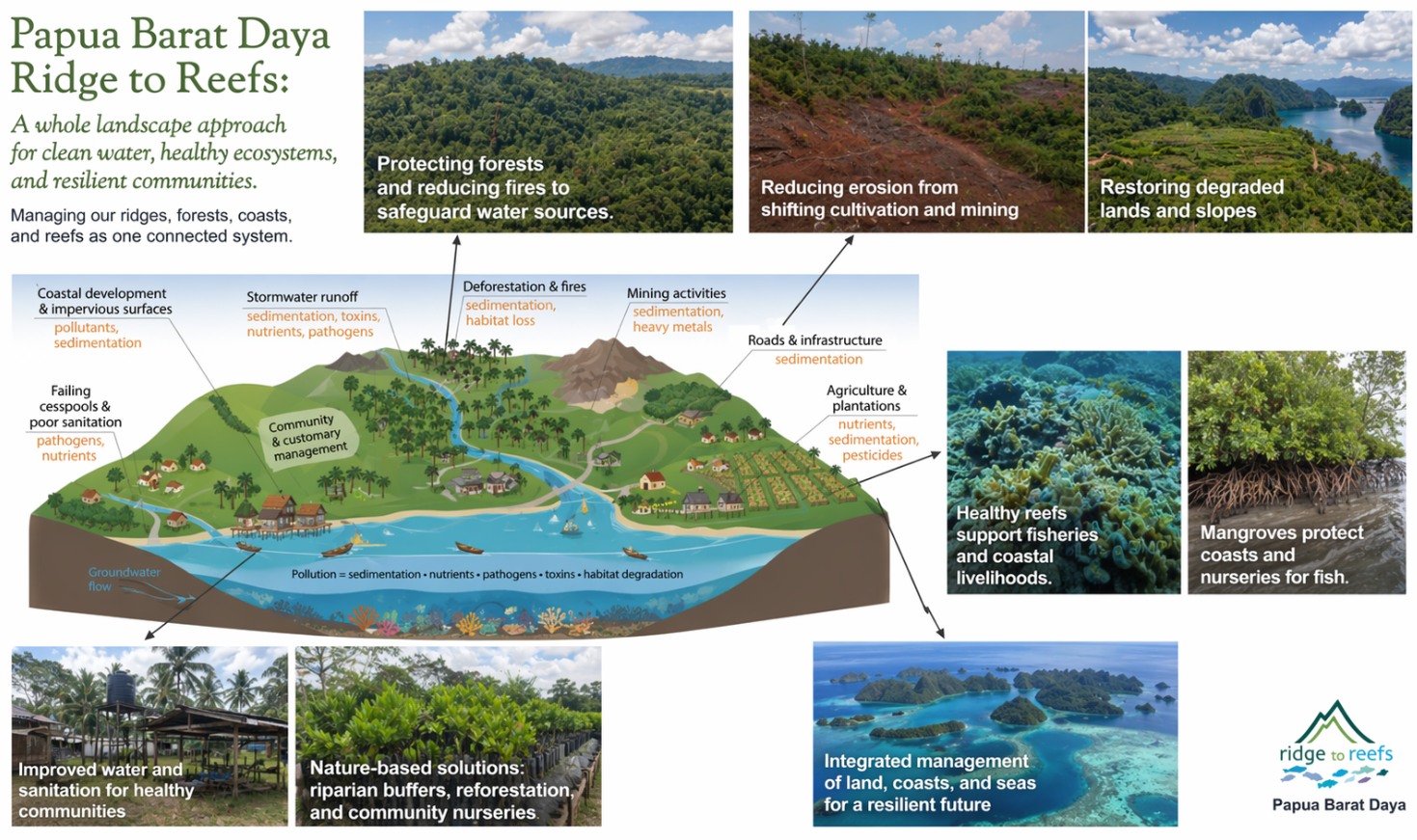
Featured Context
Ridge to Reefs: Why Land and Sea Must Be Managed as One System
Evidence & Science
PEP's work is grounded in years of on-the-ground observation and local water quality data. Peer reviewed science supports and validates what we have been seeing in the Dampier Strait for years.
Local Water Quality Data
On-the-ground monitoring data from the Dampier Strait — the evidence PEP has been collecting for years.
Scientific Papers
Peer reviewed research that supports and validates what PEP has been observing on the ground in Raja Ampat.
- Carrasco Rivera & Wenger, Ocean & Coastal Management, 2026 — Wastewater pollution undermines coastal marine protection
- Donovan et al., PNAS, 2020 — Nitrogen pollution interacts with heat stress to increase coral bleaching across the seascape
- Vega Thurber et al., Global Change Biology, 2014 — Chronic nutrient enrichment increases prevalence and severity of coral disease and bleaching
- Umezawa et al., Coral Reefs, 2002 — Significance of groundwater nitrogen discharge into coral reefs
- Szmant, Estuaries, 2002 — Nutrient enrichment on coral reefs: is it a major cause of coral reef decline?
- Burkepile et al., Ecosystems, 2020 — Nitrogen Identity Drives Differential Impacts of Nutrients on Coral Bleaching and Mortality
- Lapointe et al., Marine Pollution Bulletin, 2019 — Nitrogen enrichment, altered stoichiometry, and coral reef decline at regional scales
- Wiedenmann et al., Nature Climate Change, 2013 — Nutrient enrichment can increase the susceptibility of reef corals to bleaching
- Zhang et al., Science of the Total Environment, 2023 — Synergistic and antagonistic effects of nitrate and ammonium on fatty acid biosynthesis and translocation in corals under heat stress
- Muscatine et al., Proceedings of the Royal Society B, 1989 — The effect of external nutrient resources on the population dynamics of zooxanthellae in a reef coral
- Wagner et al., Marine Ecology Progress Series, 2010 — Species composition, habitat, and water quality influence coral bleaching in southern Florida
- DeCarlo et al., Science Advances, 2020 — Nutrient-supplying ocean currents modulate coral bleaching susceptibility
- Zaneveld et al., Nature Communications, 2016 — Overfishing and nutrient pollution interact with temperature to disrupt coral reefs down to microbial scales
- Gove et al., Nature, 2023 — Coral reefs benefit from reduced land–sea impacts under ocean warming
- Mulà et al., Nature Ecology & Evolution, 2025 — Restoration cannot be scaled up globally to save reefs from loss and degradation
Plastic & Solid Waste Resources
Practical guides and tools for community-based waste management, recycling, and circular economy approaches.
Policy & Governance
Regulatory frameworks and international policy context for PEP's government engagement and vessel monitoring work.
Collaboration & Partnerships
PEP works with government, the tourism sector, international development partners, and local communities. We are looking for funders, collaborators, and partners who want to help build the infrastructure that makes marine protection real.
Why Collaborate
PEP's work is built on relationships with the Raja Ampat Tourism Department, BLUD UPTD (marine protected area authority), local village communities, homestay owners, liveaboard operators, and international development organisations. None of this infrastructure gets built without those partnerships.
We are actively collaborating with Conservation International Indonesia, CORDAP, and international development partners on funding and scaling our approach. If you are a philanthropist, a conservation NGO, government institutions, or international organization that wants to support practical infrastructure and effective Ridge-to-Reef management to reduce pollution-related threats to one of the world's most important marine ecosystems, we want to hear from you.
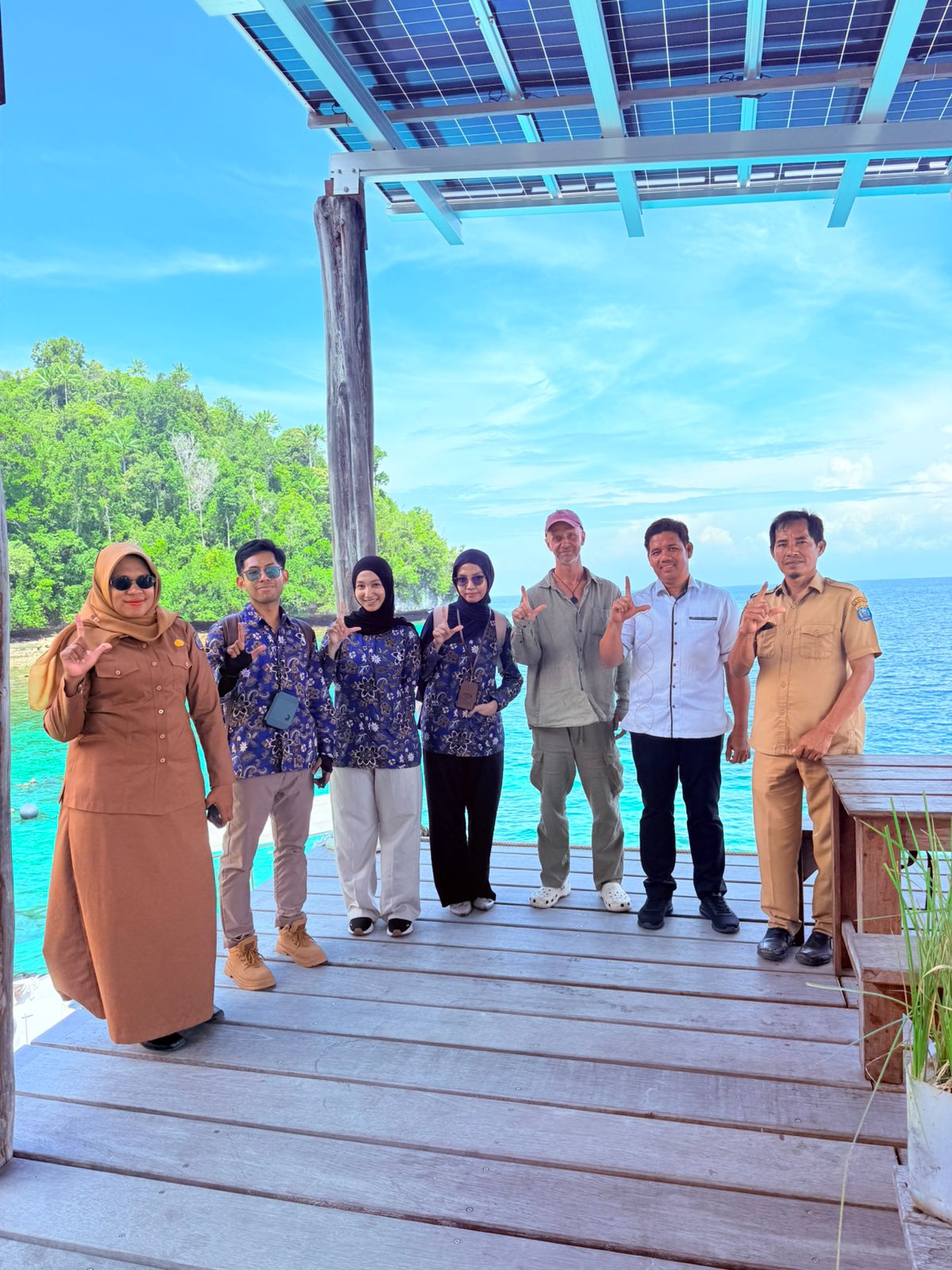
Support Our Mission
Your contribution directly funds wastewater infrastructure, reef science, vessel monitoring, coral restoration, and community waste programmes in Raja Ampat. Practical work. Real outcomes. On the ground now.
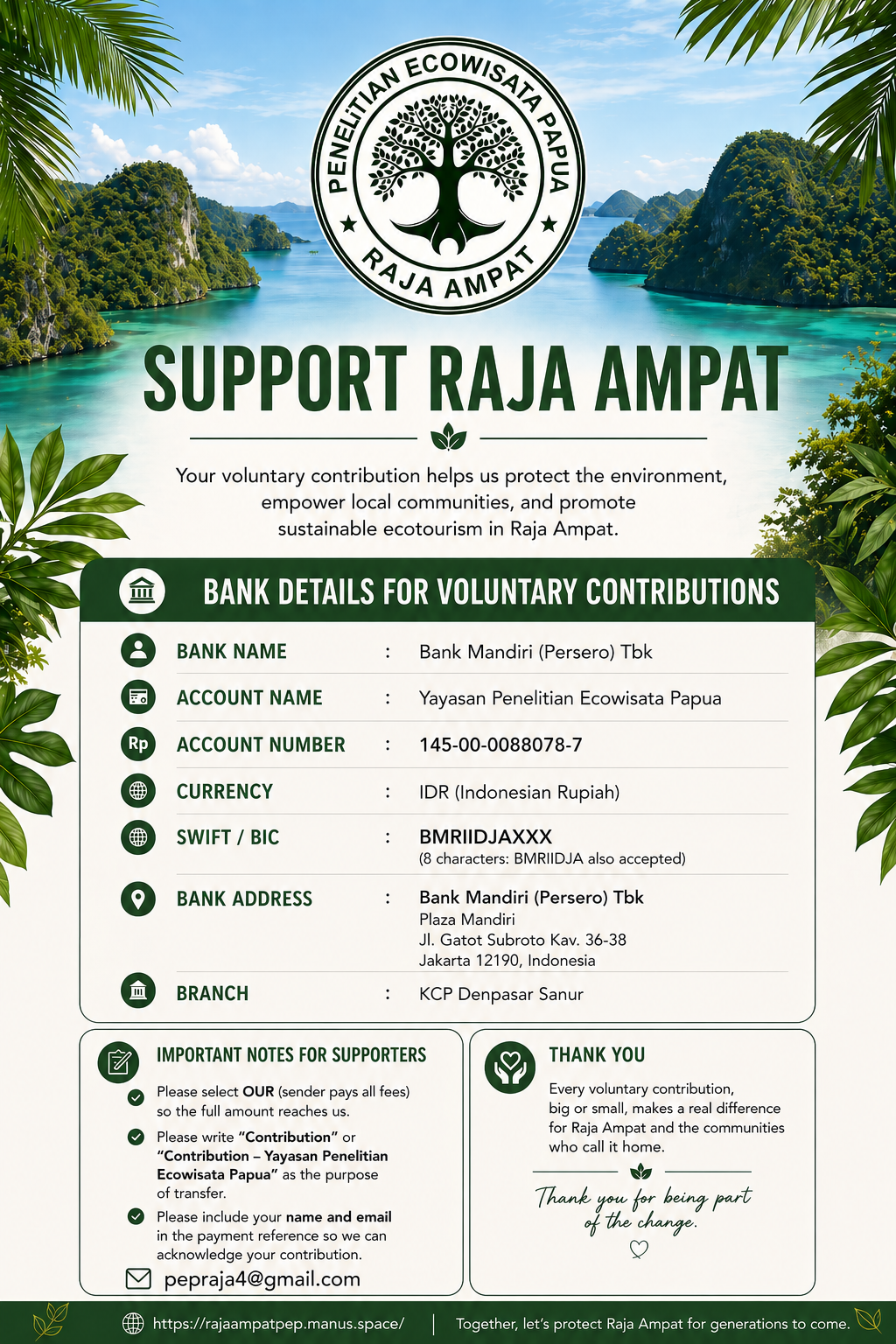
PEP is a registered non-profit organization in Papua Barat Daya, Indonesia.
Our Partners for a Resilient Raja Ampat
Emperor Divers
Raja Ampat Eco Lodge
Raja Ampat Tourism Department
BLUD UPTD
Conservation International Indonesia
CORDAP
TropWater JCU
Get In Touch
Whether you have a question, an idea, or want to learn more about our work, connect with us to stay updated and find out how you can contribute to protecting Raja Ampat's precious ecosystems.