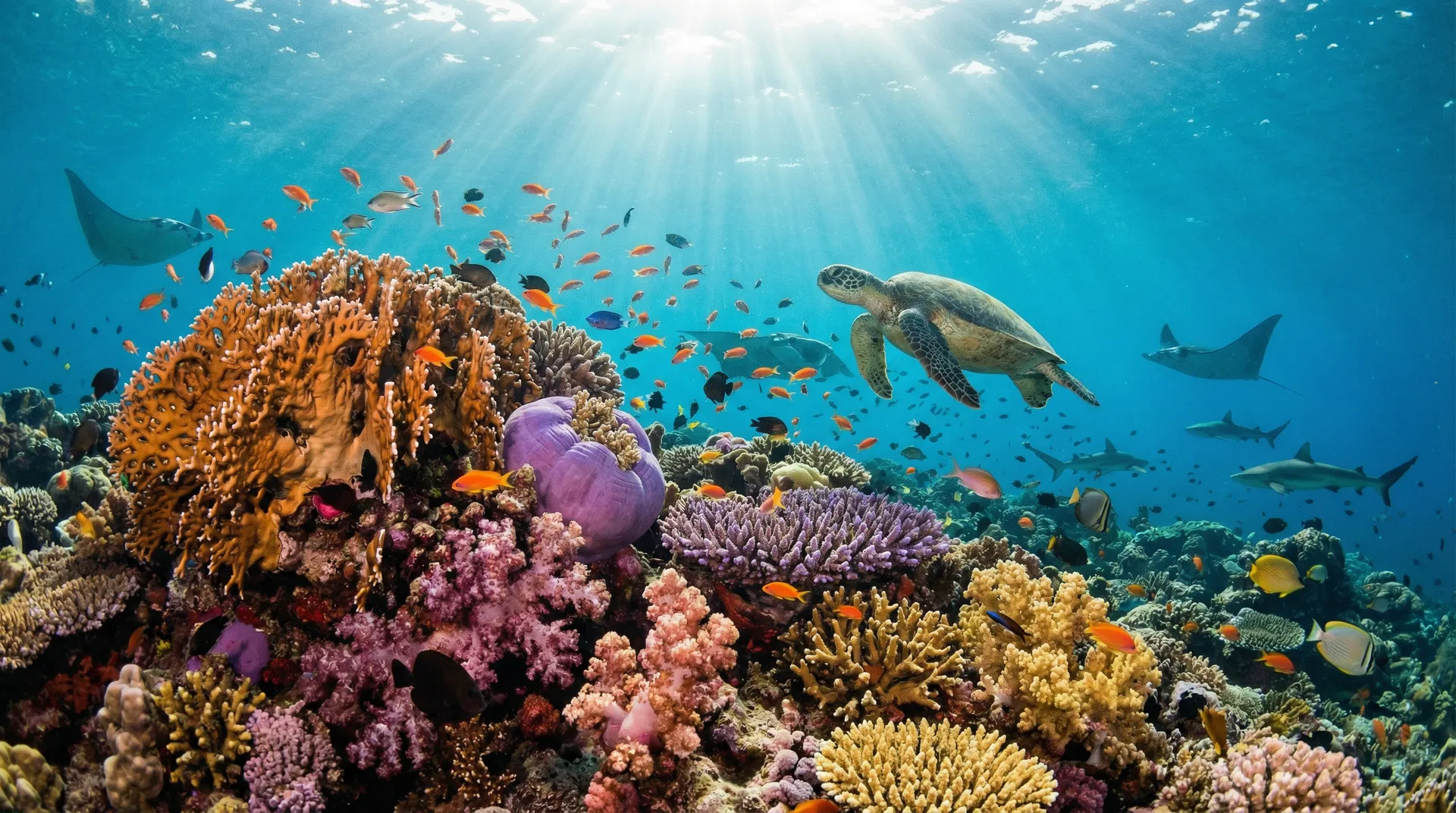
Coral restoration is a growing field. But there is a fundamental problem with restoring corals inside an MPA that has no wastewater infrastructure: the restored corals are returned to the same nitrogen-impacted water that degraded them in the first place. Excess nitrogen fuels algae growth, lowers the temperature at which corals bleach, and compounds the damage from climate stress. You cannot restore your way out of a water quality problem.
PEP's approach is different. In partnership with Orang Laut (The Sea People), PEP combines active coral restoration at Saporkren with upstream ReefSaver wastewater treatment at the same site. The ReefSaver removes nitrogen and pathogens from household wastewater before it reaches the reef. Restored corals are returned to measurably cleaner water. This is what a genuine ridge-to-reef approach looks like in practice.
Ridge-to-Reef Approach
The term "Ridge-to-Reef" recognises that reef health is directly connected to what happens on land. Nitrogen moves from land to sea through rain, groundwater, rivers, and wastewater. In Raja Ampat's porous limestone geology, shallow septic tanks and soak pits leak directly into the groundwater and from there into nearshore reef waters within hours.
By installing the ReefSaver upstream of active coral restoration sites, PEP ensures that restored corals are not immediately re-exposed to the nitrogen pollution that contributed to their degradation. This integrated approach — treat the water first, restore the reef second — gives restored corals a genuinely better chance of long-term survival.
The Integrated Strategy
ReefSaver systems treat household wastewater before it reaches the ocean, removing pathogens and excess nutrients.
Reducing nutrient runoff lowers the temperature at which corals bleach and reduces severity of bleaching events.
Coral fragments are cultivated and transplanted onto degraded reef areas to accelerate natural recovery.
Regular monitoring of both water quality and coral health ensures the integrated approach is delivering results.
Coral Gardens at Saporkren
PEP is running a series of spider reef restoration structures — "coral gardens" — at PEP's field office in Saporkren in the Dampier Strait. These structures provide a framework for coral fragments to attach and grow, accelerating the natural reef recovery process. The Saporkren site is also the location of the first installed ReefSaver system, treating household wastewater upstream of the restoration site.
Active weeding of algae blooms, cyanobacteria mats, and sponge overgrowth keeps the coral gardens more resilient and better able to recover from bleaching events. Algae and cyanobacteria blooms are themselves a symptom of nitrogen enrichment — which is why wastewater treatment upstream is not optional. It is the foundation the restoration work stands on.
Coral Garden Maintenance
- Installing spider reef restoration structures as coral attachment points
- Transplanting coral fragments from healthy donor colonies
- Regular removal of algae blooms that compete with corals for space
- Clearing cyanobacteria mats that can smother young coral growth
- Managing sponge overgrowth to protect coral colonies
- Monitoring coral growth rates and overall reef health indicators
Programme Infographic
Coral Restoration
Penelitian Ecowisata Papua (PEP) · Coral Restoration
Coral Reef Restoration
You cannot restore your way out of a water quality problem. Treat the water first.

PEP is running active coral restoration at sites in the Dampier Strait, alongside the ReefSaver pilot installation at Saporkren. Treating the water is step one. Giving the reef a chance to recover is step two.
Water quality first
Coral fragments planted in high-nitrogen water face the same conditions that caused degradation. The ReefSaver addresses the upstream problem.
Active restoration
Coral nurseries and fragment transplantation at sites in the Dampier Strait. Species selected for resilience to local conditions.
Ridge to reef
Reducing nitrogen inputs from land — through wastewater treatment and agricultural management — is the most effective reef restoration tool available.