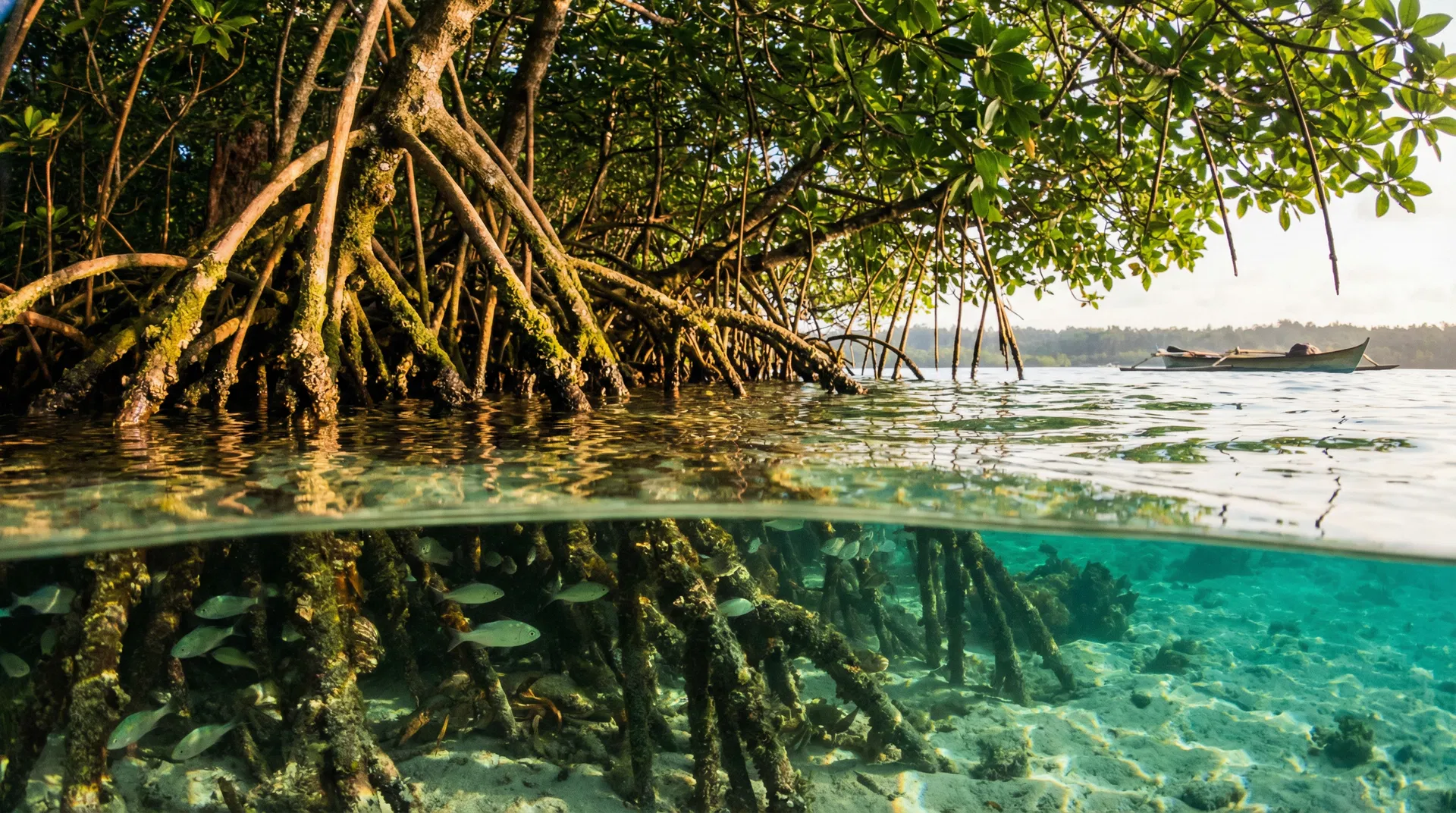
Beyond waste management, PEP's work extends to actively restoring the habitats and protecting the wildlife that make Raja Ampat a global treasure. These programs are run in close partnership with government bodies, local communities, and expert NGOs to ensure the long-term health of the region's interconnected ecosystems.
The illegal wildlife trade remains one of the most pressing threats to Papua's extraordinary biodiversity. PEP's bird rehabilitation program directly combats this by rescuing and rehabilitating captive birds, giving them a second chance at life in the wild.
A Safe Space for Recovery
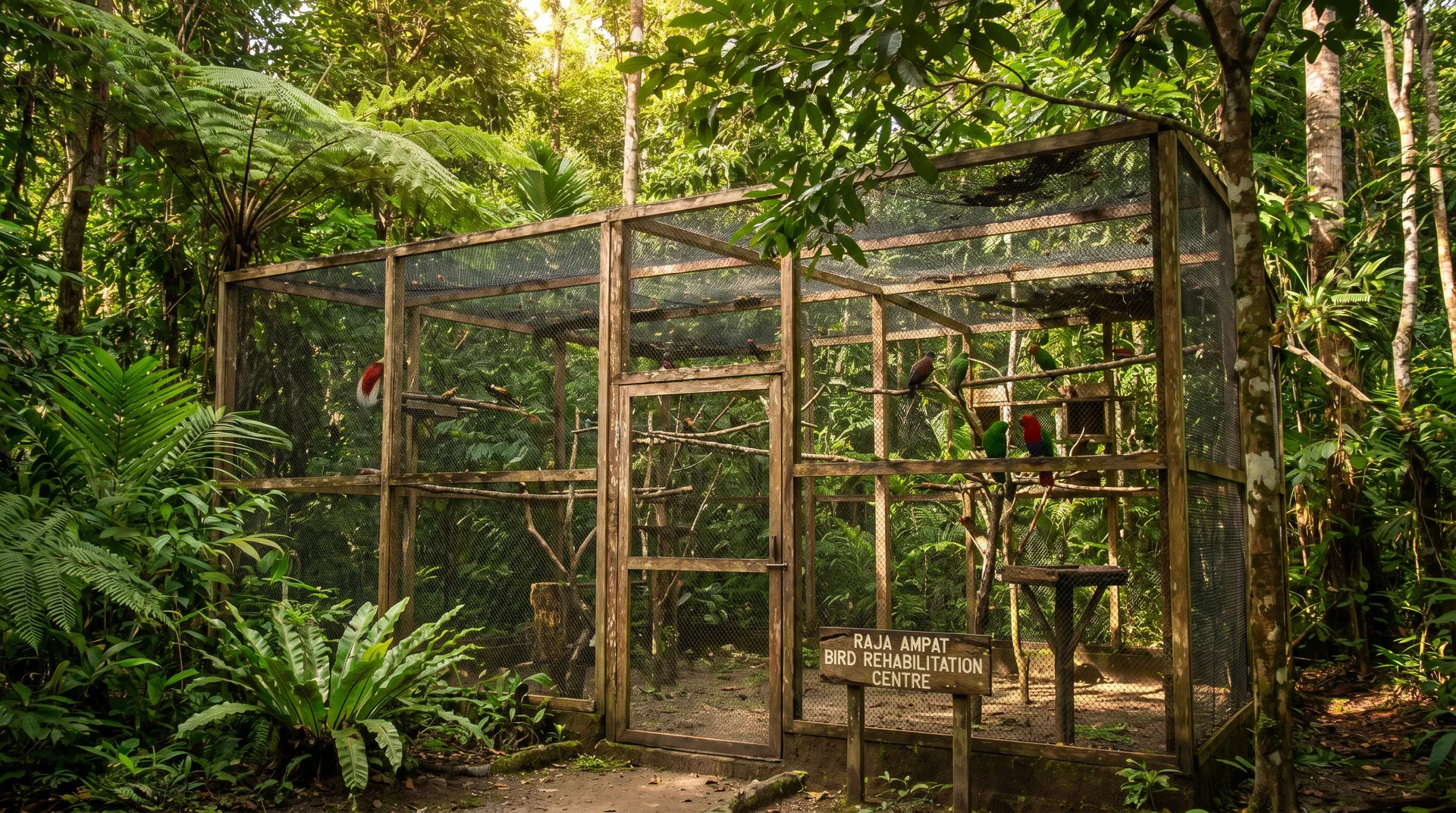
PEP's field office in Saporkren is host to an aviary surrounded by an agroforestry system and native jungle, providing a safe space for previously captive pet birds to gradually return to the wild, helping ensure higher survival rates.
The gradual rehabilitation process is essential — birds that have been kept in captivity often lose their natural survival instincts and need time to relearn foraging, flight, and social behaviours before they can be safely released back into the rainforest canopy.
Rehabilitation Process
Previously captive birds are received and assessed for health, behavioural readiness, and species identification.
Birds are housed in a spacious aviary surrounded by native jungle, allowing gradual acclimatization to natural conditions.
The surrounding agroforestry system provides natural food sources and habitat, easing the transition from captivity.
When ready, birds are released into the native forest, with monitoring to ensure higher survival rates.
Visit the Aviary
Visitors to the aviary may provide a small voluntary contribution to support rehabilitation work and receive education on Papua's megadiverse bird species and the ills of the wildlife trade.
Papua is home to some of the world's most spectacular bird species, including birds of paradise, cockatoos, and lorikeets. Understanding these species and the threats they face is essential for building a culture of conservation that protects them for future generations.
What Visitors Learn
- Papua's extraordinary bird diversity and endemic species
- The devastating impact of the illegal wildlife trade
- How captive birds are rehabilitated and returned to the wild
- The role of agroforestry in creating wildlife habitat
- How visitors can support bird conservation efforts
- The connection between healthy forests and healthy reefs
Programme Infographic
Bird Rehabilitation
Penelitian Ecowisata Papua (PEP) · Biodiversity
Bird Rehabilitation
Supporting Raja Ampat's biodiversity above and below the waterline

PEP's base of operations in Saporkren supports bird rehabilitation alongside reef and wastewater work. A healthier ecosystem — above and below the waterline — supports the ecotourism that funds the whole system.
Next Section