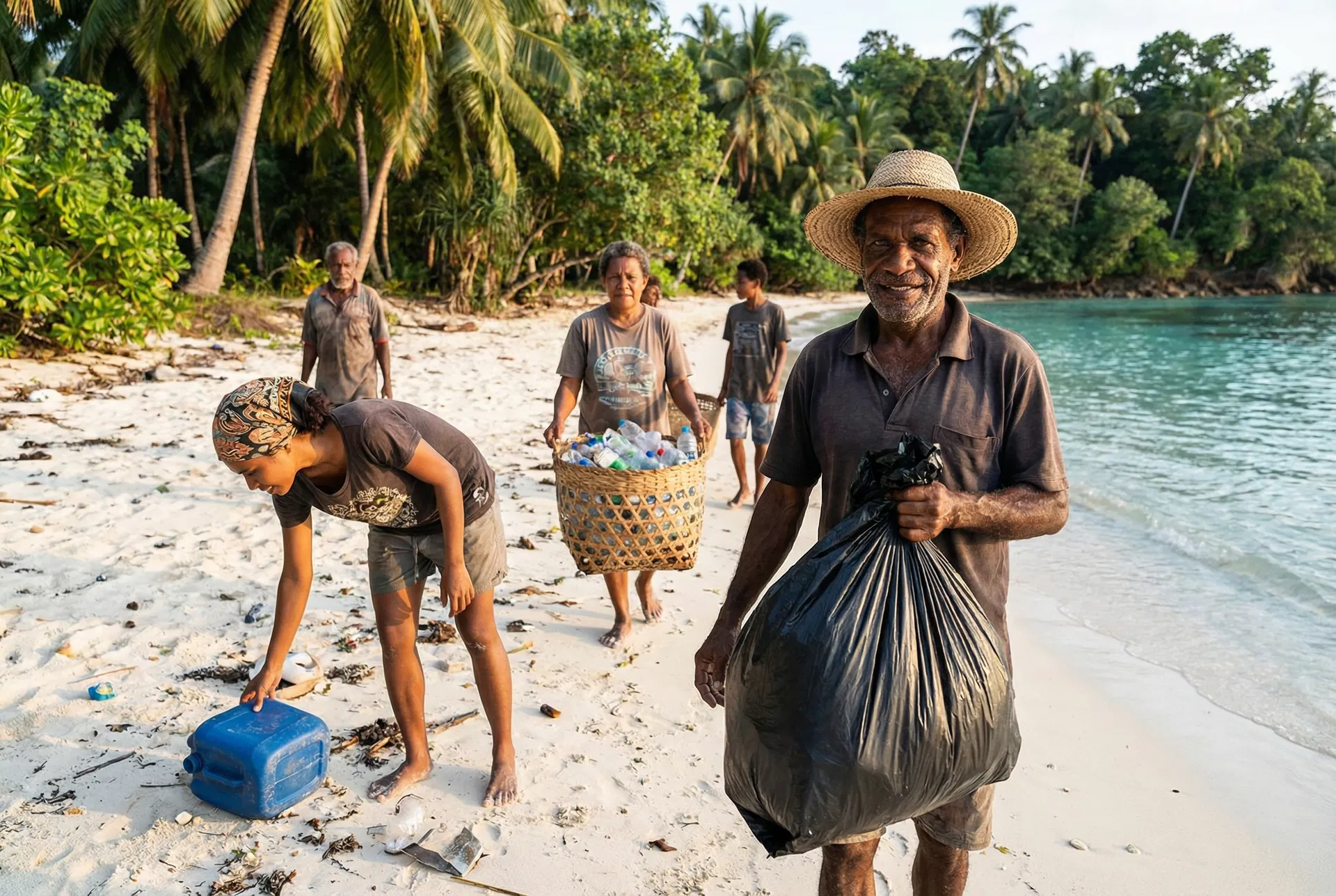
While education and recycling address existing waste, true progress requires preventing plastic from entering the environment in the first place. PEP's three-pronged strategy combines local alternatives, policy advocacy, and physical capture systems.
Alternatives
PEP works with local leaders to encourage Papuan-based alternatives such as noken bags and thatch packaging (with vetiver grass from our ReefSaver or native plants), bamboo or reed straws, and more.
This focus on locally available options creates jobs for Papuans, especially the elderly and other disadvantaged groups. Papuan-based, plastic-free packaging also keeps weaving traditions alive.
Local Alternatives
- Noken Bags— Traditional Papuan woven bags replacing plastic carriers
- Thatch Packaging— Using vetiver grass and native plants for wrapping
- Bamboo Straws— Locally harvested bamboo replacing plastic straws
- Reed Straws— Natural reed alternatives for single-use plastics
- Traditional Weaving— Preserving cultural heritage while solving environmental problems
Supporting Policy: Bans & Fines
Bans must accompany the promotion of Papuan-based alternatives to accelerate behaviour change across the population. Working with its government partners, PEP will help identify key products for bans, including plastic straws, bags, single-use sachets, certain bottles, plastic water cups, and more, relying on waste stream studies.
Of course, changing long-time behaviours is difficult, so alternative materials and bans may not be enough on their own. For that reason, PEP and the local government are investigating fines to reduce illegal plastic use and dumping. Plastic-use fees have already been integrated into local regulations but to no effect, unfortunately, making fines a necessary next step.
Targeted Products for Bans
PEP works with government partners to identify priority items through comprehensive waste stream studies.
Capture
Certain spots like narrow points or bridges along rivers, drainage ditches, canals, and others will need to be equipped with barriers that capture plastic while allowing water and aquatic organisms to pass.
PEP and the local government are studying where to install plastic-capture technology and the means of funding it. These capture points serve as the last line of defense, preventing plastic from reaching the ocean and Raja Ampat's precious coral reefs.